What Happens to a Hybrid After 10 Years in Phoenix?
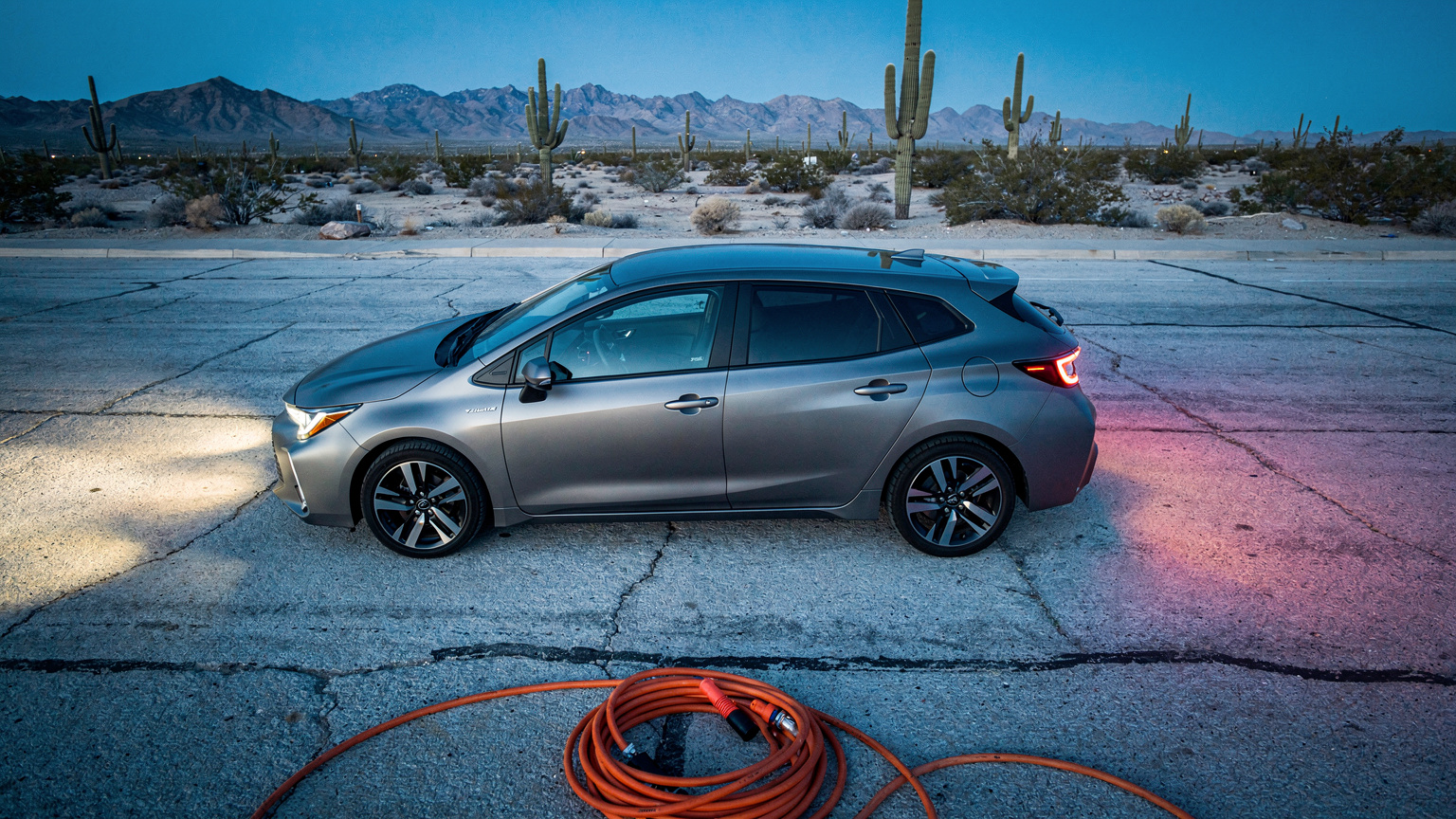
A 10-year-old hybrid in Phoenix ages on a different clock than one in Seattle. Here's what fails first, in what order, and the honest signal for each.
A ten-year-old hybrid in Phoenix has typically lived through more than 1,000 days above 100°F, and that heat exposure — not mileage — is the single biggest thing separating it from the same car in Seattle. Two identical 2015 Priuses at 120,000 miles can be in completely different condition at year ten depending on which one parked outside in Arizona.
Heat accelerates every chemical process inside a nickel-metal-hydride pack. It also bakes the plastics, dries the rubber intake seals on the battery cooling duct, and shortens the life of every 12V battery you put in the car. None of that shows up on a mileage sticker.
What actually ages first?
Things go in a fairly predictable order on Arizona hybrids. The order matters, because owners often assume the expensive part failed when the cheap part did.
1. The 12V battery. This is almost always first, and it repeats. In Phoenix, a 12V auxiliary battery that a manual says lasts five years often gives up in two to four. The first honest signal is a slow, hesitant power-up sequence, a dash that lights up like a Christmas tree all at once, or a car that reads dead in the morning but starts fine after a jump. Cost is $100 to $400 depending on the battery. If you're unsure which battery is misbehaving, the 12V versus hybrid battery diagnostic sorts it in one visit.
2. The battery cooling fan and its intake path. On most Toyota and Lexus hybrids, the traction pack is air-cooled by a small fan that pulls cabin air through a vent — usually behind the rear seat or in the rear quarter panel. Dust, pet hair, and the fine caliche grit that gets into everything in the Valley clog that intake. A restricted fan means the pack runs hotter, and a hotter pack ages faster. The first signal is a fan that runs loud and constantly on a warm day, or one you never hear at all. Cleaning it is $99 installed, and on a ten-year-old Arizona car it is rarely wasted money.
3. Voltage-sensing wires and bus bars. The copper bus bars linking modules corrode, and the thin sense wires that report each block's voltage get brittle. Corroded connections read as voltage faults even when the cells behind them are fine. New nickel-plated bus bars with stainless nuts run $149 installed; a new voltage-sensing wire harness is $249 installed.
4. The traction pack itself. Individual modules drift apart in capacity. One weak block drags the whole pack. The first signal is behavioral, not electronic: the state-of-charge bar on the dash swinging from near-full to near-empty in a couple of miles, the engine kicking on immediately at every stop, or a noticeable drop in MPG. Codes follow — P0A80, P0A7F, or the P3011–P3024 block-weak series that names the exact bad block.
5. Inverter coolant and the inverter water pump. Separate cooling loop, separate part, and frequently forgotten. The coolant degrades and the pump wears. P0A93 is the code. This one is genuinely independent of the battery, and replacing a pack won't fix it.
What should I expect at each age band?
| Age of car | Traction pack | 12V | Cooling / other | Typical first symptom | |---|---|---|---|---| | 0–5 years | Usually fine, still under Toyota's factory hybrid coverage | First replacement often due | Fan intake starting to load with dust | Nothing, or a dead 12V | | 6–8 years | Blocks begin to drift; MPG softens a few points | Second replacement | Fan cleaning worth doing | Erratic charge bar, small MPG drop | | 9–12 years | The common window for a Phoenix pack to throw a code | Third replacement | Bus bars showing corrosion; inverter coolant due | Red triangle, check hybrid system, P0A80 | | 13+ years | Original pack is on borrowed time regardless | Ongoing | Sense harness brittle, fan bearings worn | Repeat codes after a partial repair |
That 9-to-12-year window is the Arizona version. In a mild coastal climate the same pack commonly runs several years longer. Nothing is wrong with your car — it just did its aging faster.
What warning lights actually mean at this age
On a ten-year-old Toyota or Lexus, the red triangle master warning and the "Check Hybrid System" message usually appear together, and they are not by themselves a diagnosis. They mean the hybrid ECU stored something. It could be one weak block, a corroded bus bar, a dying fan, or an isolation fault. The stored code tells you which. Guessing costs money; reading the code doesn't.
Should I spend on the pack or start planning to sell?
This is the real decision at year ten, and it's arithmetic, not sentiment.
Our installed prices for Prius and CT200h are set, not estimates. Rebuilt NiMH is $1,199 with a 1-year warranty, $1,399 with a 2-year warranty, or $1,599 with a 4-year warranty. New aftermarket NiMH is $2,199 with a 4-year warranty. New OEM Toyota NiMH is $2,899 with a 3-year warranty. Other models vary on install labour. Full pricing is published here.
The questions worth answering before you choose:
- How's the rest of the car? Struts, tires, AC compressor, transaxle. A pack is a good investment in a body and drivetrain you'd keep anyway.
- How long do you plan to hold it? Two more years and the Essential rebuilt pack matches the horizon. Six or eight more years and the 4-year options make more sense. Warranty terms and what to ask are laid out on the warranty page.
- What's the car worth with a dead pack? A hybrid with a stored P0A80 sells for meaningfully less than the same car running right. Sometimes the repair pays for itself in resale alone.
- Is it actually the pack? Often it isn't. A fan cleaning and new bus bars have brought plenty of ten-year-old cars back for a fraction of a pack price.
There's no wrong answer here. A ten-year-old Prius that's otherwise solid is a cheap car to keep running. One that also needs suspension, brakes and AC work is a different math problem.
Can anything slow the aging down?
Some. Park in shade or a garage when you can — surface parking in August is where packs cook. Keep the cooling intake clear. Don't let the car sit unused for weeks at a time in summer heat. And an annual hybrid battery service that checks block voltages catches drift while it's still a $99 or $149 fix instead of a full pack.
We come to you anywhere in the Phoenix metro, the diagnostic is free, and mobile install in the metro is free too. Most installs take about 30 minutes in your driveway. Book a free diagnostic or call 623-323-0737 and we'll tell you which of the five things above your car actually has.