Service
Hybrid battery repair, reconditioning and refurbishment
Reconditioning repairs the pack you already have: the weak modules come out, the rest are tested and rebalanced, and the pack goes back in. It's a real option for the right car — and the wrong choice for others. Here's how to tell which one you have.
What this includes
- Module-level testing rather than a single pass/fail on the whole pack
- Straight answer on whether your pack is a good candidate
- Cooling system addressed at the same time — it's usually part of the story
- Different warranty terms than replacement, stated up front
What reconditioning actually does
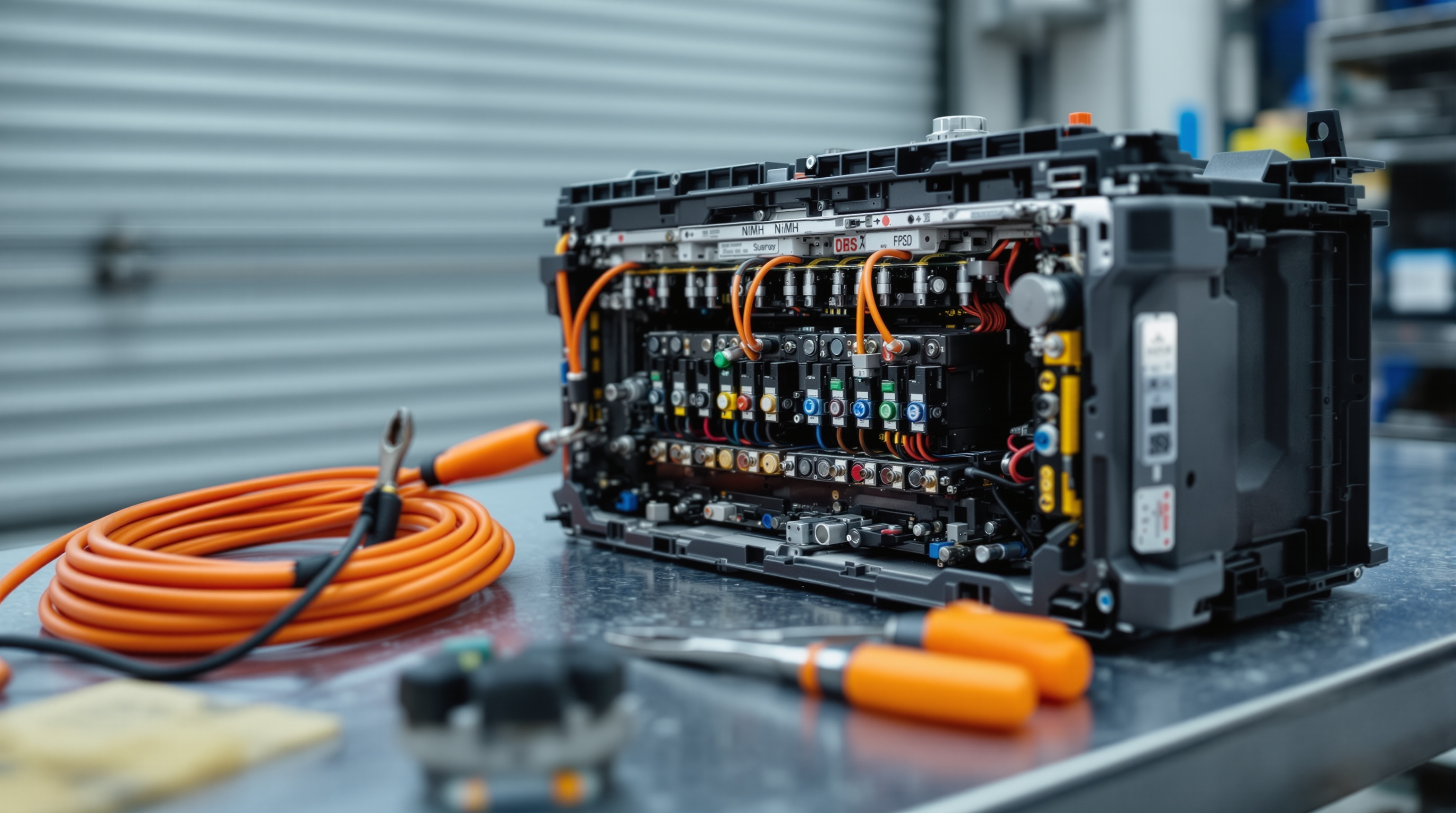
A Toyota or Lexus nickel-metal hydride pack is a series of modules wired together. The pack is only as strong as its weakest link, so a pack can fail because two or three modules have degraded while the rest are still serviceable.
- 1The pack comes out and is disassembled down to individual modules.
- 2Each module is tested — capacity, internal resistance, and how it holds voltage under load. This is the step that separates real reconditioning from a guess.
- 3Weak modules are removed and replaced with tested modules matched to the rest of the pack.
- 4The pack is charged, discharged and rebalanced so the modules start life together at the same state of charge.
- 5Bus bars, connectors and the case are cleaned and inspected; corroded hardware gets replaced.
- 6The pack goes back in, the system is reset and the car is road tested.
Reconditioning is not a “reset”
Clearing codes or doing a forced charge/discharge cycle without opening the pack is not reconditioning. If a price sounds too good, ask whether the pack is being opened and tested at module level at all.
When reconditioning tends to make sense
- The failure is clearly concentrated — a small number of blocks are dragging down a pack that is otherwise in reasonable shape.
- The rest of the vehicle is sound and you plan to keep it a few more years.
- You are trying to keep the car on the road on a tighter budget and understand the trade-off in expected service life.
- The pack has a good cooling history: clean intake, working fan, no evidence of chronic overheating.
- You want a lower up-front cost and accept a shorter warranty than a replacement pack carries.
When replacement is the better call
- The whole pack has aged evenly — every module is tired, so swapping a few just moves the failure a few months down the road.
- There is evidence of chronic overheating, water intrusion, corrosion or rodent damage inside the pack.
- The pack has already been reconditioned once and has failed again.
- You drive a lot of miles, tow, or need the highest confidence for a long commute across the Valley.
- The difference in cost is small enough that the longer warranty on a replacement pack is the better value.
We'll tell you when reconditioning is the wrong answer
There is no version of this where we take your money for a repair we expect to fail. If the data says replace, that's what we'll recommend, even though it's the more expensive conversation to have.
Reconditioning vs. replacement at a glance
| Reconditioning | Replacement | |
|---|---|---|
| Up-front cost | Lower | Higher |
| Expected service life | Shorter, and more variable | Longer, more predictable |
| Warranty | Shorter term — see our warranty page for current terms | Longer term — see our warranty page for current terms |
| Best for | Concentrated failure, sound vehicle, shorter horizon | Even ageing, high miles, long horizon |
| Risk | Remaining original modules are still ageing | Lower, assuming the cooling issue is also fixed |
Frequently asked questions
Is a reconditioned hybrid battery worth it?
How long does a reconditioned hybrid battery last?
Can you recondition a battery that's already been rebuilt once?
Do you fix just one bad cell?
Recently published
Latest from the blog
 Warning lights5 min read
P0A7F: Why Your Hybrid Battery Pack Is Being Called 'Deteriorated'
P0A7F means the hybrid battery's control system has judged the pack degraded. Here's what it measures, how it differs from P0A80, and your repair options.
 Decisions5 min read
Reconditioning vs. replacing a hybrid battery: which one does your car actually need?
Reconditioning fixes a few weak blocks in an otherwise sound pack. Replacement is for widespread wear. Here's how to tell which one your hybrid needs.
- Decisions5 min read
What does a hybrid battery cost in Arizona? Real price ranges for repair and replacement
Typical Arizona hybrid battery pricing: $500–$900 to recondition, $1,000–$2,000 to replace, $100–$400 for a 12V. Here's what drives the number.
Not sure what your hybrid needs? Start with the free diagnostic.
We come to you, test the pack, the 12V and the cooling, and you get a written quote before anything is decided. No charge, no obligation.