Toyota · 2010–2015 (XW30)
2010–2015 Toyota Prius (XW30) hybrid battery — the complete guide
The third-generation Prius is the single most common hybrid on Arizona roads and by far the most common car we work on. It's old enough that most are now on their original pack's last legs, common enough that the failure patterns are well understood, and simple enough that the repair decision is usually clear once you have the data.
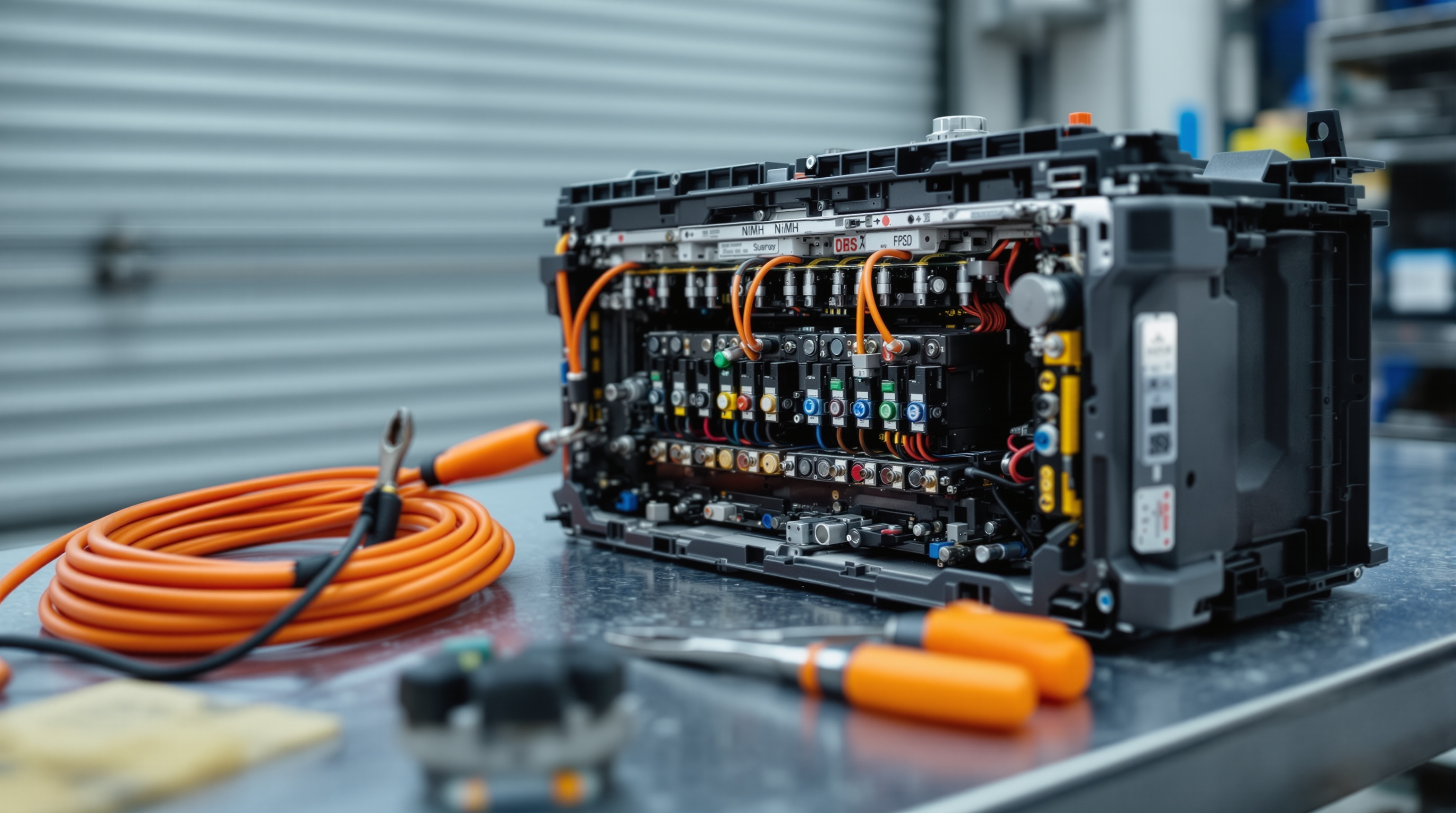
Toyota Prius (2010–2015, third generation) hybrid battery at a glance
- Chassis code
- XW30 — sold in the US from 2010 through 2015
- Battery type
- Nickel-metal hydride (NiMH)
- Nominal pack voltage
- Approximately 201.6V
- Construction
- 28 modules of 7.2V, monitored by the battery ECU in 14 blocks of two
- Pack location
- Behind the rear seat, under the cargo floor bulkhead
- Cooling
- Cabin air drawn by an electric fan through an intake vent on the right-hand side of the rear seat area
- 12V battery location
- Right-hand side of the rear cargo area, not under the hood
- Typical repair cost
- Reconditioning $500–$900 · Replacement $1,000–$2,000 · Free diagnostic first
- Before ordering parts
- Battery chemistry and part numbers changed within some model years. We confirm against your VIN before quoting or ordering parts.
Why the XW30 is the car we see most
Toyota sold enormous numbers of these in Arizona, and they were bought by exactly the people who keep cars: commuters, rideshare drivers, retirees and students. A 2012 Prius bought new is now fourteen years old, and the pack in it has spent fourteen Phoenix summers being cooled by cabin air. That combination — huge volume, high age, hot climate — is why this one model is the bulk of our work.
The good news is that it makes the XW30 the best-understood hybrid battery in the state. We know what the failure patterns look like, we know which blocks tend to go first, and we know when reconditioning holds up and when it doesn't.
The codes you'll actually see on a third-gen Prius
These are the ones that come up, roughly in order of how often. Every one of them is a reason to test — none of them is an instruction to buy a part.
| Code | What it means on an XW30 | What it usually turns out to be |
|---|---|---|
| P0A80 | The battery ECU has decided the pack is outside its expected performance window. Its official description — “Replace Hybrid Battery Pack” — is why this code causes so much unnecessary spending. | Genuine pack degradation most of the time on a car this age. But the useful question is whether it's concentrated in a few blocks (reconditioning territory) or spread across all 14 (replacement). Block data answers that; the code doesn't. |
| P3011 – P3024 | One code per block, in sequence — P3011 is block 1, P3024 is block 14. The ECU is naming exactly which block has fallen behind. | Genuinely useful. But we still measure all 14, because the question that matters is how close the others are behind the one that triggered. |
| P0A7F | Hybrid battery pack deterioration — the pack has aged past what the system will accept. | Often appears alongside P0A80 on high-age XW30s. Same practical answer: get block-level data before deciding. |
| P3000 | Battery control system, Toyota-specific. Carries an INF sub-code that narrows it down considerably. | The sub-code is where the information is. A basic code reader often can't show it, which is why a P3000 alone should never produce a battery quote. |
| P0A0F | Engine failed to start — the hybrid system commanded a start and the engine didn't fire. | Usually engine-side on this car: fuel, spark, compression, or a crank/cam sensor. The P0A prefix misleads people into thinking battery. |
| P0AA6 | High-voltage isolation fault — loss of electrical isolation between the HV system and the chassis. | The one to take most seriously. Water intrusion, damaged cable insulation, or rodent damage. Don't drive it, don't touch the orange cabling. |
| P0A93 | Inverter cooling system performance — the inverter's own coolant loop isn't performing. | A far cheaper repair than a battery, and a classic Phoenix summer fault. Frequently misdiagnosed as a failing pack because the symptom — warning light plus reduced power on a hot day — looks identical. |
The single most expensive mistake on this car
Accepting a hybrid battery quote based on P0A80 alone. It's the most-read code on the most-common hybrid, its name literally says “replace the pack”, and a meaningful number of XW30s quoted a battery actually need a 12V, an inverter coolant pump, or a cooling-intake clean. Ask what block-level data was captured. If the shop can't tell you, they haven't diagnosed your car.
Third-gen symptoms, in the order they usually appear
- 1Fuel economy drifts down. High 40s becomes low 40s, then high 30s, over a few months. Usually months before any warning light.
- 2The battery gauge on the energy screen starts swinging — full to two bars in a few minutes of city driving, then back up.
- 3The engine stops shutting off at stoplights. On an XW30 this is very noticeable once you know to listen for it.
- 4The cooling fan behind the rear seat runs louder and longer than it used to, on days that don't justify it.
- 5Acceleration flattens out — most obvious merging onto the I-10 or the 101 in July.
- 6The red triangle appears, often first on a hot afternoon and sometimes clearing on a cool morning.
- 7Reduced power mode, or the car refusing to enter READY.
If you're at step 1 or 2, you have options and time. If you're at step 6 or 7, get it looked at now — a pack that's dragging the rest of the system down does more damage the longer it runs.
The XW30 cooling intake — the Arizona-specific part
On the third-generation Prius the hybrid battery is cooled by cabin air, drawn through an intake vent in the right-hand side of the rear seat area by an electric fan. That design is the single biggest reason Phoenix XW30 packs die younger than the same car in a mild climate.
- Anything resting against that vent restricts the airflow directly — a bag, a booster seat, a folded stroller, a dog bed.
- Valley dust and pet hair are drawn in and mat into the filter over years. We routinely find intakes on 12-year-old cars that have never been cleaned.
- A restricted intake means a hotter pack, and heat is what ages NiMH chemistry. It's a slow, invisible cost until it isn't.
- If the fan is running hard and constantly on a mild day, that's the system trying to compensate for airflow it isn't getting.
- Cleaning it protects a healthy pack. It will not revive a degraded one — if your pack is already weak, do both.
Recondition or replace an XW30 pack?
This is the decision almost every third-gen owner faces, and on this car it's genuinely a real choice rather than a foregone conclusion. Here's how the data usually breaks down.
| What the block data shows | What it means | Usual recommendation |
|---|---|---|
| One or two blocks clearly behind, the other 12–13 grouped tightly | Concentrated failure. The pack has plenty of life left outside the failed blocks. | Reconditioning — $500–$900. A good outcome on this car. |
| Three or four blocks behind, the rest showing a widening spread | The pack is starting to go as a whole. Replacing the worst blocks buys time, not years. | A genuine judgement call. Depends how long you're keeping the car — we'll show you the numbers and be honest about it. |
| All 14 blocks tired and drifting together | Even, whole-pack ageing. Typical of high-mileage commuter and rideshare cars. | Replacement — $1,000–$2,000. Reconditioning here is money spent twice. |
| Evidence of overheating, corrosion, or water intrusion inside the pack | The pack's environment failed, not just the cells. | Replacement, plus fixing whatever caused it. Otherwise the new pack lives the old one's life. |
| A previously rebuilt pack that has failed again | Either the cooling was never addressed, or the remaining modules were already too far gone. | Replacement, and a hard look at the cooling path. |
Why the XW30 is a good reconditioning candidate more often than most
Sheer volume. There are enough third-gen packs in circulation that well-matched tested modules are genuinely available, which is what makes a rebuild hold up. On rarer models that's much harder, and it's why reconditioning advice doesn't transfer between vehicles.
Is a 2010–2015 Prius worth putting a battery in?
Usually, yes — and here's the honest reasoning rather than the sales version. These cars regularly pass 250,000 miles. Arizona bodies don't rust, so a 14-year-old Valley Prius is often structurally better than a 7-year-old car from the Midwest. And the alternative to a $1,000–$2,000 repair is a replacement car at many times that.
- Worth it if the car is otherwise sound and you'll keep it two or more years.
- Worth it if it's a work vehicle — rideshare, delivery — where downtime costs more than the repair.
- Think harder if it also needs struts, brakes, an inverter coolant pump and tyres. Add it up honestly before you commit.
- Think harder if the transaxle or engine has known issues — a good pack in a failing car is money in the wrong place.
- We'll tell you when it isn't worth it. The free diagnostic gives you that answer without a commitment.
What we do on an XW30 mobile visit
- 1Free diagnostic at your home or workplace — full module scan including sub-codes, block-level voltage and resistance across all 14 blocks, 12V load test, cooling fan and airflow check.
- 2We show you the block numbers and explain the spread. You see the same data we're deciding from.
- 3Written quote on the spot — reconditioning, replacement, cooling repair, 12V, or something else entirely.
- 4If you go ahead, the install is typically completed the same visit. The XW30 pack sits behind the rear seat and is one of the more straightforward packs to access — this is the model where about 30 minutes is realistic.
- 5The cooling intake is inspected and cleaned as part of the job. Fitting a good pack into a blocked cooling path is how a car ends up back here.
- 6Codes cleared, system verified, road test, and the old pack taken away for proper high-voltage recycling.
Toyota Prius (2010–2015, third generation) hybrid battery questions
How much does a 2010–2015 Prius hybrid battery cost?
My 2012 Prius has P0A80. Do I definitely need a battery?
Where is the hybrid battery cooling vent on a third-gen Prius?
How many miles will a 2010–2015 Prius do after a new battery?
Can you do a third-gen Prius battery at my house?
Is the 2010–2015 pack the same as a 2016+ Prius?
Get a quote for your Toyota Prius (2010–2015, third generation)
Include the model year and what the car is doing. We confirm battery chemistry against your VIN before quoting parts.
Recently published
Latest from the blog
 Warning lights5 min read
P0A7F: Why Your Hybrid Battery Pack Is Being Called 'Deteriorated'
P0A7F means the hybrid battery's control system has judged the pack degraded. Here's what it measures, how it differs from P0A80, and your repair options.
 Decisions5 min read
Reconditioning vs. replacing a hybrid battery: which one does your car actually need?
Reconditioning fixes a few weak blocks in an otherwise sound pack. Replacement is for widespread wear. Here's how to tell which one your hybrid needs.
- Decisions5 min read
What does a hybrid battery cost in Arizona? Real price ranges for repair and replacement
Typical Arizona hybrid battery pricing: $500–$900 to recondition, $1,000–$2,000 to replace, $100–$400 for a 12V. Here's what drives the number.
Not sure what your hybrid needs? Start with the free diagnostic.
We come to you, test the pack, the 12V and the cooling, and you get a written quote before anything is decided. No charge, no obligation.