What does a hybrid battery cost in Arizona? Real price ranges for repair and replacement
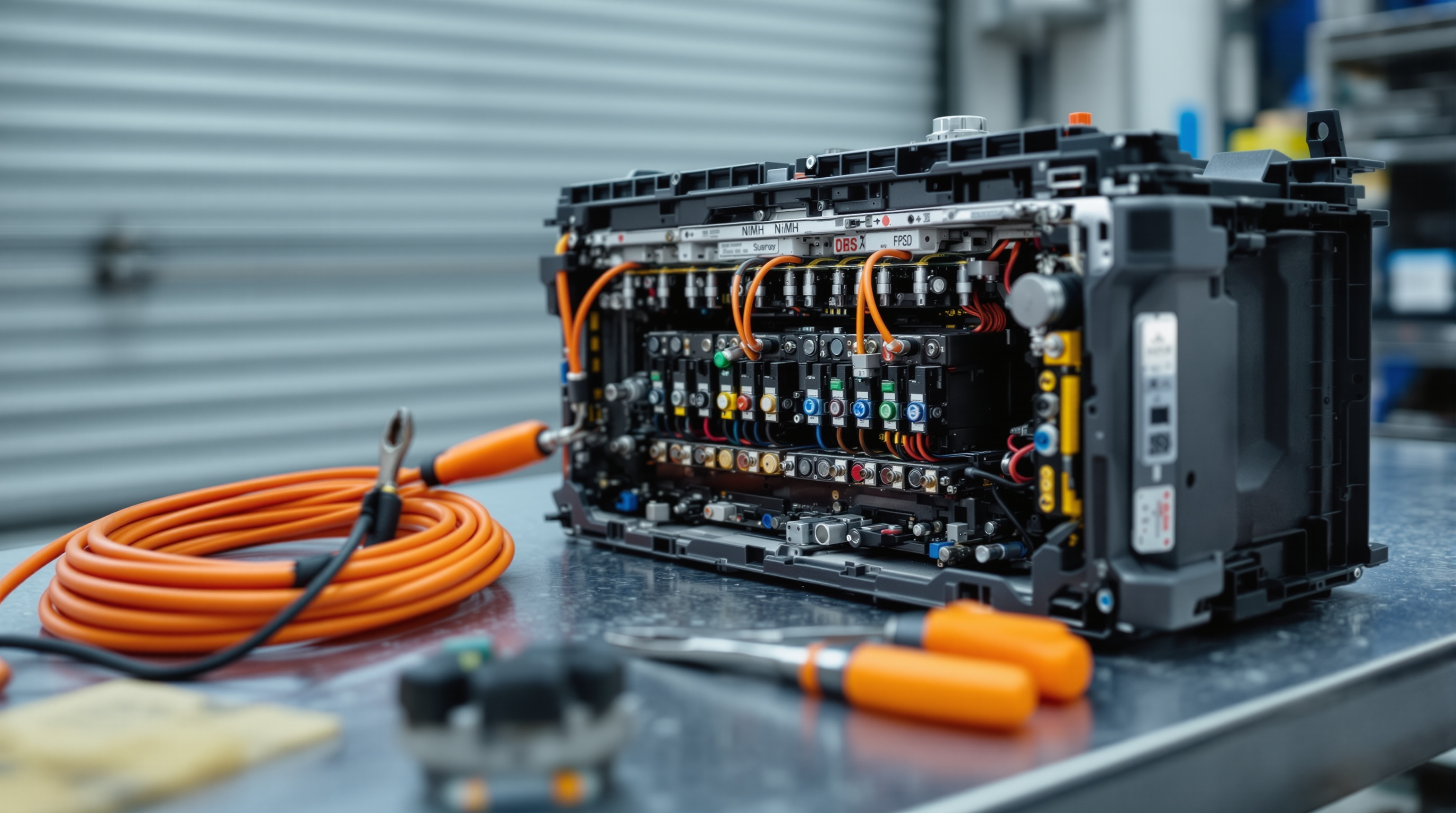
Typical Arizona hybrid battery pricing: $500–$900 to recondition, $1,000–$2,000 to replace, $100–$400 for a 12V. Here's what drives the number.
A hybrid battery in Arizona typically costs $500 to $900 to recondition, or $1,000 to $2,000 to replace. If the real problem turns out to be the 12V battery — and it often is — you're looking at $100 to $400 instead. Those are typical ranges for a first repair on the vehicles we service.
If a dealer just handed you a number well above that, it isn't necessarily wrong. It usually means you were quoted a full new pack when nobody has checked whether the whole pack is actually bad.
The three repairs people confuse with each other
Most owners searching for hybrid battery pricing are actually facing one of three different jobs. They cost very different amounts, and the symptoms overlap enough that guessing is expensive.
| Repair | Typical range | What it addresses | Common signs | |---|---|---|---| | 12V battery | $100 – $400 | The small accessory battery, not the hybrid pack | Car won't boot up, dash lights flicker, random warnings, dead after sitting | | Reconditioning | $500 – $900 | A pack with a handful of weak modules, rest still healthy | Falling MPG, state of charge bouncing, P3011–P3024 codes | | Full replacement | $1,000 – $2,000 | A pack that's degraded across the board | P0A80, repeated failures after service, high mileage and age |
All ranges are what a first repair usually lands at. The full price list is published here so you can compare before anyone touches the car.
What actually moves the number
How many modules are bad
A Toyota or Lexus nickel-metal hydride pack is a series of modules. They don't fail all at once. A pack can throw a warning light because two or three modules have drifted out of line with the rest while the remaining modules still hold charge well.
That's the difference between the $500–$900 range and the $1,000–$2,000 range. Reconditioning addresses the weak sections and rebalances the pack. Replacement is the right call when testing shows the degradation is spread across the whole thing — at that point patching a few modules just moves the failure to a different block.
Nobody can tell which situation you're in from the dash light alone. That's what the hybrid battery diagnostic is for, and it's free.
Which vehicle it is
Pack size and layout vary a lot. A Prius c is a different job from a Highlander Hybrid, and Honda, Ford, Hyundai, Kia, Nissan and Chevrolet packs each have their own quirks. Access matters too — some packs sit behind the rear seat and come out cleanly, others take more disassembly.
You can check the vehicles we service to see where yours falls.
Whether the hybrid battery is even the problem
This is the one that saves people the most money. A weak 12V battery in a hybrid produces symptoms that look catastrophic: the car won't start, the dash lights up with warnings including the red triangle, and the whole system seems to have failed. The hybrid pack can be completely fine.
Arizona heat is brutal on 12V batteries specifically. Three summers is a hard life for one here. Before anyone quotes you four figures, the 12V should be load tested — that's a separate check we do as part of the diagnostic.
Why Arizona owners hit this sooner
Hybrid packs are cooled by cabin air pulled through a vent, usually near the rear seat or in the trunk area. That system is designed around moderate ambient temperatures. In a Phoenix summer, the air being used to cool the pack is already hot, and a car parked outside all day soaks to well above ambient before you even start it.
Heat accelerates chemical degradation in the cells. The practical result is that a pack that might have gone ten or twelve years in a mild climate often starts showing symptoms here earlier — sometimes years earlier. It's not that your car failed prematurely. It's that Arizona ages these packs faster than the design assumptions.
The other Arizona factor is dust. That cooling vent clogs with dust and pet hair, the fan moves less air, and the pack runs hotter than it should. Keeping it clean is part of the annual battery service, and it's one of the few things that genuinely extends pack life in this climate.
Reading the code before you accept a quote
If you've had the codes pulled, they tell you something about which repair you're likely facing.
P0A80 — Replace Hybrid Battery Pack. The name is doing a lot of work here. It means the control module has decided a block is out of tolerance. It does not automatically mean the whole pack is finished. More on P0A80 here.
P3011 through P3024 — Battery Block Becomes Weak. These name a specific block. That's usually the most reconditioning-friendly scenario, because the fault is localized.
P0A7F — Hybrid Battery Pack Deterioration. Broader wear across the pack, and more often a replacement conversation.
The full warning light and code index covers what each one actually indicates.
What the appointment looks like
We come to you. The diagnostic happens at your house or your workplace, in the driveway or the parking spot, and it costs nothing. You get told which of the three repairs your car needs and what it will run before you commit to anything.
Most installs take about 30 minutes once the work is scheduled. You don't drop the car off, you don't arrange a ride, and you don't lose a day. We cover cities across the Phoenix metro and beyond.
Ask about the warranty before you pay
Whoever you use — us or anyone else — ask what the warranty actually covers before money changes hands. Ask how long, whether it covers labor, whether it's prorated, and what happens if a different module fails later. Get the answer in writing. Here's what to ask about warranty coverage so you know the right questions.
If you've been quoted a number and want a second opinion, the diagnostic is free and we come to you. Call 623-323-0737 or book a mobile diagnostic.