Reconditioning vs. replacing a hybrid battery: which one does your car actually need?
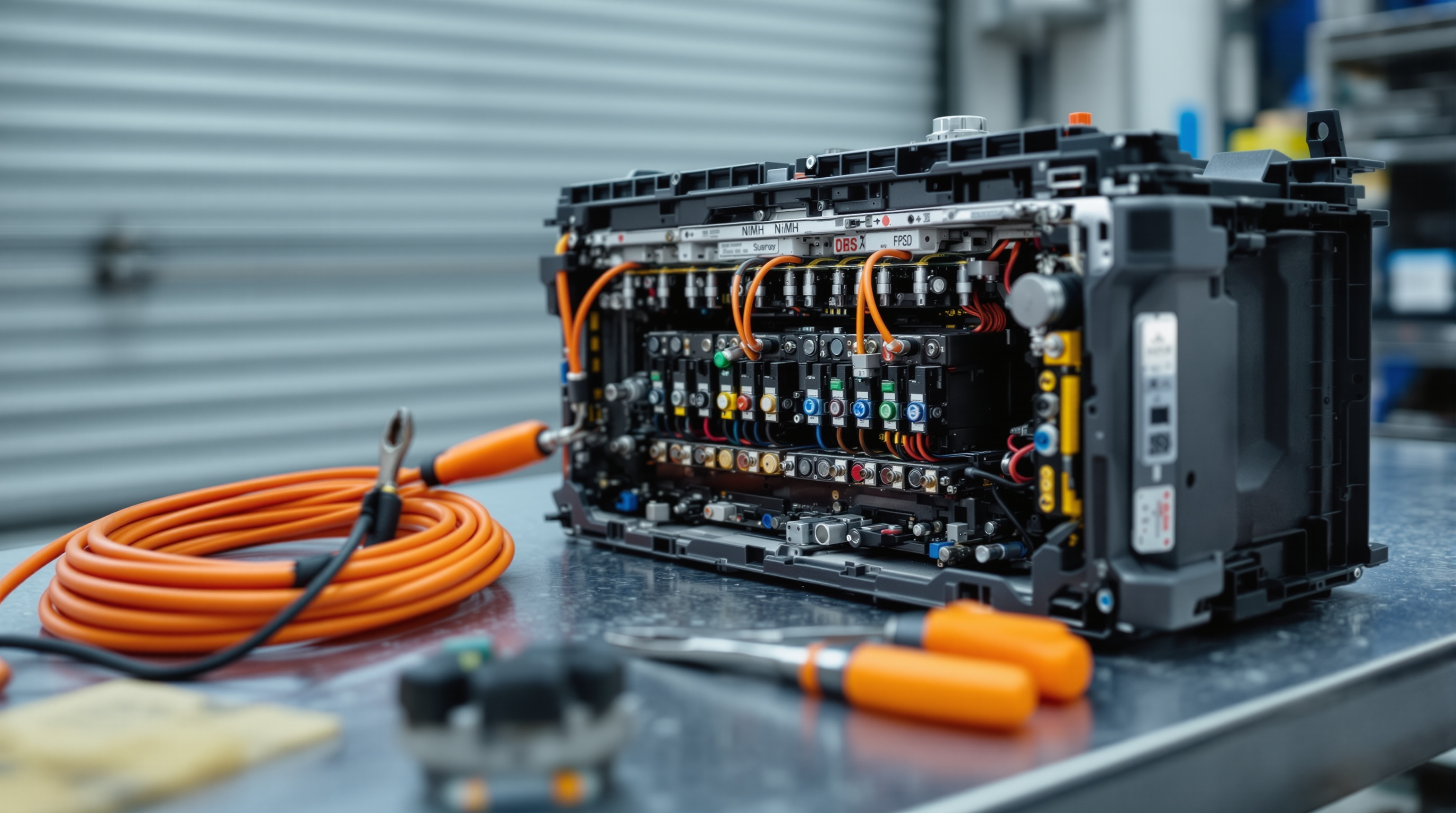
Reconditioning fixes a few weak blocks in an otherwise sound pack. Replacement is for widespread wear. Here's how to tell which one your hybrid needs.
Reconditioning is the right call when a handful of weak modules are dragging down an otherwise healthy pack. Replacement makes more sense when degradation is spread across the whole battery, the mileage is high, or there's corrosion and prior repair work involved.
The difference matters because it's roughly the difference between a $500–$900 job and a $1,000–$2,000 one. And the only honest way to pick between them is a block-level voltage test, not a guess based on the year on your registration.
What reconditioning actually does
A hybrid battery pack isn't one battery. It's a series of modules — 28 in a second-generation Prius, 34 in a third-gen, varying counts across Camry, RAV4, Highlander, Civic, Fusion, Sonata and the rest. The car's battery ECU monitors them in pairs or small groups it calls blocks.
When one block sags under load while the others hold steady, the whole pack behaves like its weakest member. You get a state-of-charge gauge that swings from full to empty in a mile, an engine that runs constantly, and eventually a dash light.
Reconditioning means the weak modules come out, tested replacements matched by capacity and internal resistance go in, and the entire pack is rebalanced so every module starts at the same state of charge. The bus bars get cleaned, the connections get re-torqued, and the cooling path gets cleared.
That's a real repair, not a reset. But it only works when the modules staying in the pack still have life in them.
When reconditioning is the right choice
Good candidates share a pattern:
- Codes in the P3011–P3024 range. These are the "battery block becomes weak" codes, and the last two digits point at a specific block. P3017 means block 7. One or two of these codes usually means localized failure.
- P0A7F on its own. Hybrid battery pack deterioration often shows up before the pack fails outright — the ECU has noticed capacity loss but the car still drives.
- A block-level test showing a tight cluster of outliers. If 30 modules read within a narrow band and four read low, those four are the problem.
- Reasonable mileage and no prior pack work. An original pack that's simply worn a few modules is a good rebuild.
- Clean bus bars, no corrosion, no coolant or water intrusion.
When replacement is the better spend
| Situation | What it means | Better path | |---|---|---| | Weak readings spread across the whole pack | Every module is near the end of its usable capacity | Replacement | | P0A80 with a long code history | The ECU has been logging failure for a while | Usually replacement | | Very high mileage on the original pack | Modules that test okay today are close behind | Replacement | | Corrosion on bus bars or module terminals | Electrical resistance is only going to get worse | Replacement | | A pack that's already been rebuilt once | Remaining originals are older than the transplants | Often replacement | | Two or three weak blocks, rest healthy | Localized failure | Reconditioning | | Recent P3011–P3024 code, car still drives | Early-stage block imbalance | Reconditioning |
A full replacement costs more up front and buys you a pack where every module has the same history. When more than a third of the pack is marginal, rebuilding around those modules is throwing good money at a battery that's going to be back on the same list next year.
The Arizona factor nobody accounts for
Hybrid packs are cooled by cabin air pulled through a vent — usually behind the rear seat or in the trunk side panel. That fan is the only thing standing between your modules and heat damage.
In a Phoenix summer, the interior of a parked car hits 140 degrees or more. The pack soaks in that for hours, then the fan tries to cool it with air that's still 80 degrees at 10 p.m. Heat accelerates the chemical breakdown inside NiMH modules, and it does it unevenly — modules at the hot end of the pack age faster than the ones near the intake.
That's why Arizona packs often fail as a cluster of blocks rather than all at once, and it's also why reconditioning works well here. The failure pattern is frequently localized.
It's also why a reconditioned pack in the Valley benefits from being checked yearly. Dust and pet hair clog the cooling filter fast in this climate, and a blocked fan will cook a healthy rebuild. Annual reconditioning service means clearing the cooling path, retesting every module, and rebalancing the pack before an imbalance turns into a dash light in August traffic.
The test that settles it
A scan tool code tells you something is wrong. It doesn't tell you how much of the pack is involved.
A block-level voltage test does. Each block gets measured at rest and under load, and the spread between highest and lowest tells you whether you're looking at a few bad actors or a pack that's uniformly tired. That reading is what decides reconditioning versus replacement — not the model year, not the odometer, not what a forum post said.
Our mobile diagnostic is free, and we do it in your driveway or your work parking lot. If the answer is reconditioning, most installs take about 30 minutes. You don't need a tow, a loaner, or a day off.
What to ask before you agree to any work
Before you hand over a card at any shop, ask these:
- Can I see the block-level readings? Not a code printout — the actual per-block voltages. If a shop won't show you, you don't know what you're paying for.
- Which modules are being replaced, and are they tested and capacity-matched?
- Is the cooling fan and filter being serviced as part of the job?
- What exactly does the coverage include — parts, labor, both? How long? Is it transferable? What voids it? Get the answer in writing before work starts, and read our page on what to ask about warranty coverage so you know which questions matter.
- Who does the work if something goes wrong later?
A shop that answers all five clearly is a shop worth using, whatever the price on the estimate.
If you're staring at a check hybrid system message and trying to decide which repair you're facing, book the free mobile diagnostic or call 623-323-0737. We'll test the pack where your car sits and tell you which side of that table you're on.